
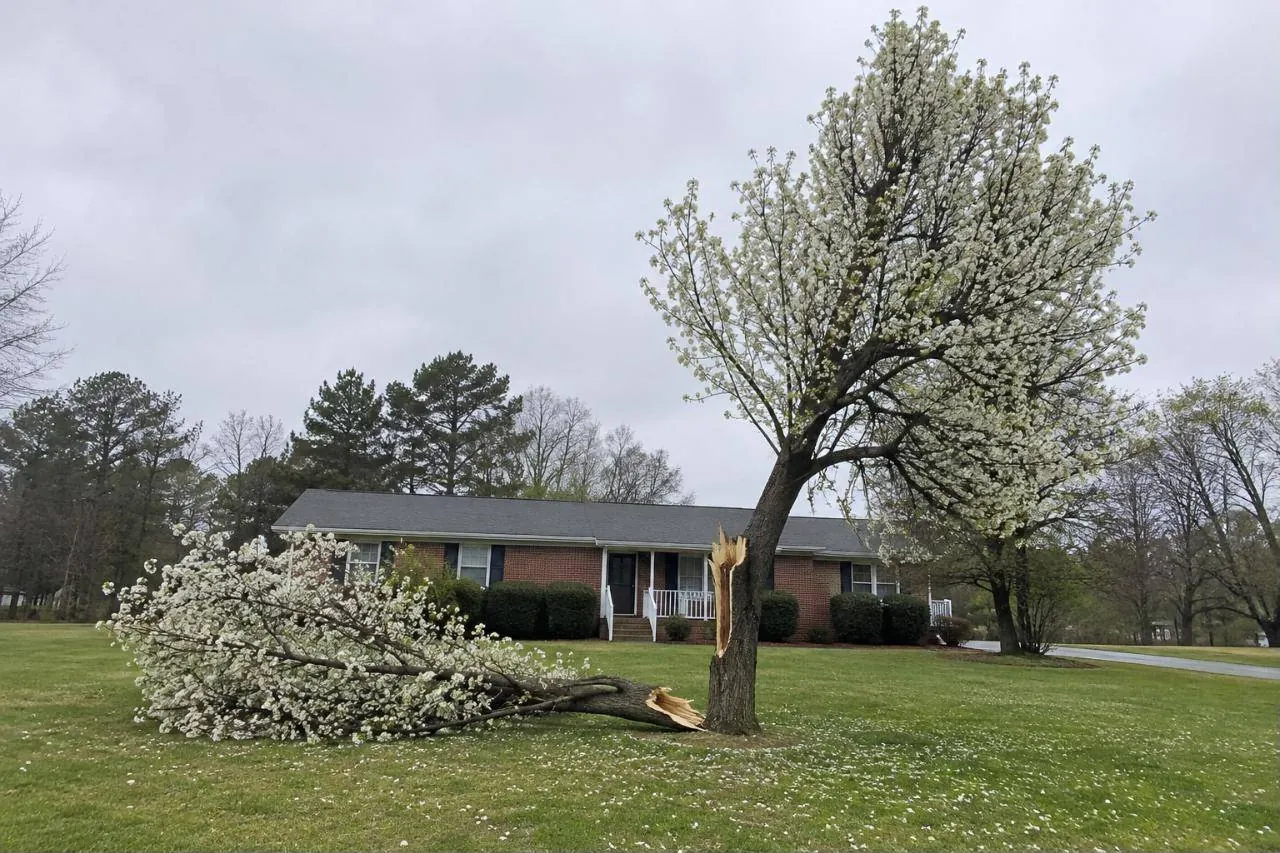
The storms that test these trees
The N.C. Forest Service puts it simply: thunderstorms frequently leave tree damage behind, and the less frequent tornadoes, ice storms and hurricanes cause serious, widespread damage. Central North Carolina has had all of them.
- Hurricane Fran, September 1996. The State Climate Office counts 24 deaths in North Carolina, half of them from falling trees, about 1.7 million customers without power, and almost $900 million in damage in Raleigh and Wake County alone.
- The ice storm of December 4–5, 2002. A half inch to an inch of ice coated a band of the Piedmont from Albemarle through Durham to Warrenton. Nearly a million people in central North Carolina lost power, some for close to a week, and large trees and power lines came down all across the region. The N.C. Utilities Commission later found that the great majority of the outages came from tree trunks or limbs falling onto lines.
- The Louisburg tornado, August 8, 2024. The National Weather Service rated it EF-1, with peak winds of 100 mph, on a 2.9-mile path east of Louisburg. Numerous trees were snapped and uprooted, the worst of it near Hickory Rock Road and White Level Road.
How the common trees stack up
No single study ranks Franklin County's yard trees for storm strength, so this table pulls together what each source says about each tree. The shaded rows are the trees the sources flag for weak wood or limb breakage in wind and ice. NC State also lists willow oak and white oak as susceptible to wind damage.
| Tree | What the sources say | Source |
|---|---|---|
| Bradford (Callery) pear | Upright branches with weak crotches that break with age, wind and ice; invasive in North Carolina | NC State Extension |
| Water oak | Limbs "notoriously weak," at risk in high winds and snow and ice; may live only 30 to 50 years | NC State Extension |
| Tulip poplar | Weak-wooded and prone to limb breakage in high winds or ice and snow; 80 to 120 feet tall; shallow roots | NC State Extension |
| Loblolly pine | Very susceptible to breakage from ice and snow; worse than longleaf in hurricane winds; severely attacked by southern pine beetle | NC Native Plant Society; N.C. Forest Service; USDA Forest Service |
| Willow oak | Fast-growing and long-lived, but susceptible to wind damage | NC State Extension |
| Sweetgum | 60 to 100 feet tall with a shallow root system; spiny "gumballs" litter lawns | NC State Extension |
| White oak | Long-lived and slow-growing; deep taproot; sensitive to soil compaction and susceptible to wind damage | NC State Extension |
No tree is storm-proof, and size, health, soil and what stands around a tree all change how it fares. A sound white oak can still fail if its roots were damaged, and a young, well-shaped water oak is a different case from an old one full of dead wood.
Bradford pear: the tree that splits
The Bradford pear is a cultivar of Callery pear. NC State Extension's plant database says its branches grow at upright angles with weak crotches that break with age, wind and ice, and that it develops tight crotches likely to be split in half by heavy wind and rainstorms. It also calls the tree relatively short-lived and lists Callery pear as an invasive species in North Carolina. Nash County's extension agent put it more bluntly in 2024: the trees have a horrible structural shape, with narrow crotch angles that leave them susceptible to breaking in moderate wind and ice storms.
The N.C. Forest Service's storm guide says a trunk split where two stems meet is structurally compromised and the tree should come down, which is where a split Bradford pear ends up. For a replacement, NC State suggests a native flowering tree instead, such as eastern redbud, flowering dogwood or serviceberry.
Water oak and willow oak
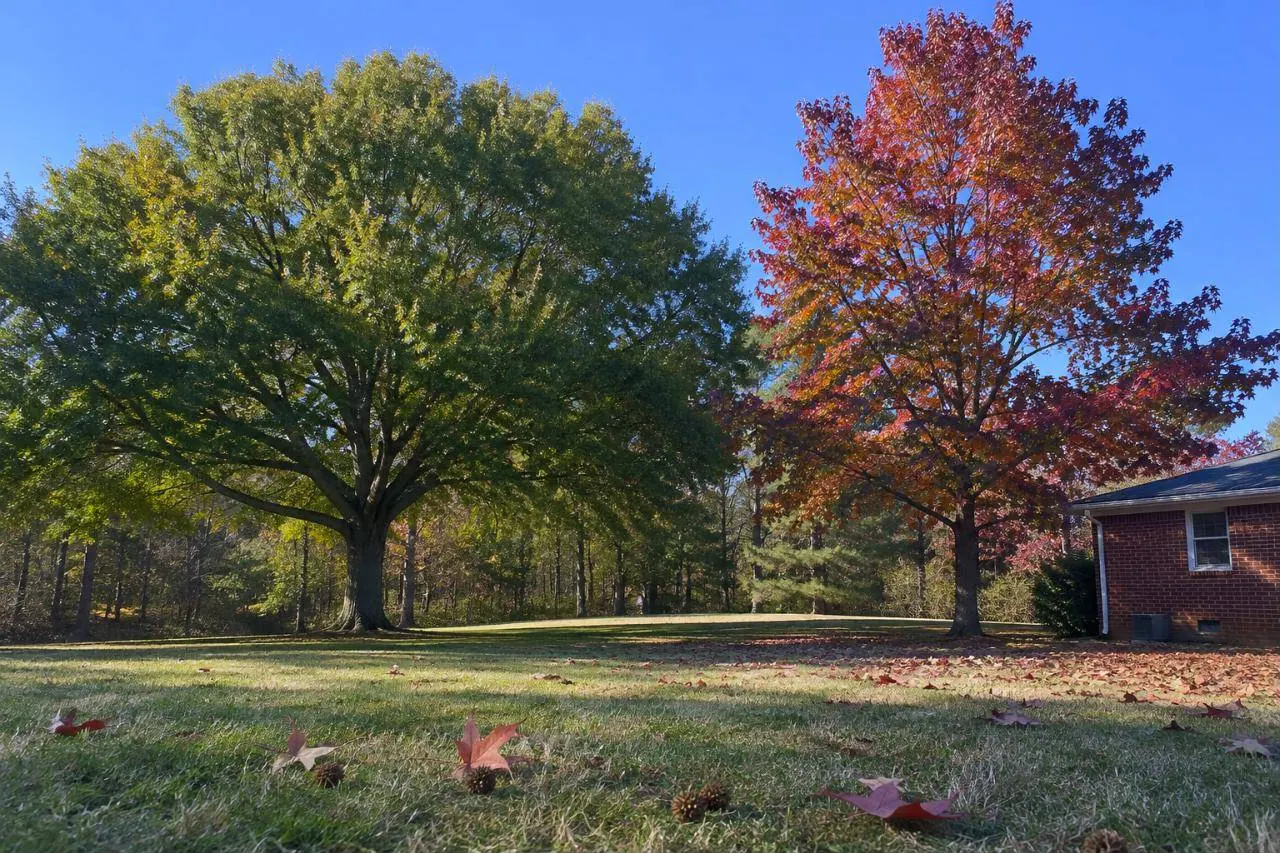
Both are big shade trees, and the leaves tell them apart. Willow oak has long, narrow, willow-like leaves, about 4 to 5 inches long and an inch wide, per NC State. Water oak's leaves run 2 to 4 inches long and vary in shape from spoon-like to narrow, with up to five lobes.
Their outlooks differ. NC State describes willow oak as fast-growing and long-lived, though susceptible to wind damage. It describes water oak as a tree that may live only 30 to 50 years, with limbs notoriously weak in wind, snow and ice, and recommends red, white and swamp white oaks instead for their stronger branch structure. An old water oak over the house, dropping dead limbs, is the first oak to have looked at.
Tulip poplar: tall and quick
Tulip poplar grows fast and tall: 80 to 120 feet by NC State's figures, with records near 200. That speed comes at a price, the database says: fast-growing means weak-wooded and susceptible to limb breakage in high winds or from ice and snow. Its roots are shallow. And NC State notes that in hot, dry weather its leaves tend to turn yellow and drop, so some early yellowing in a dry spell is something this species is known to do. A poplar that tops a two-story house by 40 feet has a lot of wood to drop.
Loblolly and Virginia pine
The North Carolina Native Plant Society calls loblolly possibly the most numerous tree in the state and says its straight branches make it very susceptible to breakage from ice and snow. In hurricane winds, a 2017 N.C. Forest Service research summary found loblolly fared worse than longleaf after Hurricane Katrina, with 26 percent mortality against 7 percent. The USDA Forest Service notes that loblolly's taproot is much shorter and stouter in clay than in deep sandy or loamy soil, and that windthrow is common on shallow soils.
Then there are the beetles. NC State Extension says bark beetles mainly attack pines already stressed by drought, disease or storm damage, and that needles fade from green to yellow to red during an attack. Watch storm-bent and ice-damaged pines near the house through the following seasons. See pine tree removal.
Virginia pine is a smaller pine, 36 to 72 feet, that the Native Plant Society calls a weedy successional tree on nearly any kind of site. The society counts it abundant in the central and upper Piedmont and fairly common east to about Caswell and Randolph counties, but uncommon farther east toward the Fall Line, so around Louisburg it's less common than loblolly.
Choosing what to plant next
- Pick stronger structure. NC State points to red, white and swamp white oaks as stronger-branched than water oak, and to native redbud, dogwood and serviceberry in place of Bradford pear.
- Avoid weak wood. NC State's storm guidance advises against species with brittle wood and weakly attached limbs.
- Give it room. Plant a tree that will reach 80 feet where 80 feet of fall won't land on the house, and well away from overhead lines. Louisburg Power keeps a 15-foot clearance around its lines.
- Call 811 before digging. Louisburg Power's policy asks customers to call NC 811 before planting.
Questions homeowners ask
How can I tell a water oak from a willow oak?
Willow oak leaves are long and narrow, like a willow's. Water oak leaves are shorter and broader toward the tip. If it matters for your decision, the contractor can identify the tree when they visit.
Should every Bradford pear come down?
Not automatically, but NC State's description of weak crotches that break with age means an older pear near the house, driveway or play area deserves a hard look.
My pines made it through the ice storm. Are they safe?
Not necessarily. Storm damage is one of the stresses that invites bark beetles. Watch for pitch tubes and a fading crown over the next year.
Which local tree is the safest near a house?
None is storm-proof. NC State calls white oak long-lived but still lists it as susceptible to wind damage and sensitive to soil compaction, so even a sound oak near the house is worth a look after a big storm or nearby digging.
Requests sent from this site go to one independent contractor in Franklin County. This website does no tree work and gives no arborist advice.
- N.C. Forest Service, NC Trees and Storms page; SRN-006, "Longleaf Pine is Resilient in the Face of Hurricane Winds" (July 14, 2017).
- State Climate Office of North Carolina, "Then and Now: Fran a Standard-Bearer for Hurricane Destruction"; December 4–5, 2002 winter storm event page. N.C. Utilities Commission, Response of Electric Utilities to the December 2002 Ice Storm (2003).
- National Weather Service Raleigh, public information statement, Louisburg tornado of August 8, 2024.
- NC State Extension Plant Toolbox: Pyrus calleryana, Quercus nigra, Quercus phellos, Liriodendron tulipifera, Liquidambar styraciflua, Quercus alba. NC State Extension, Pine Bark Beetles (2022) and Preventing and Managing Storm Damage to Trees. N.C. Cooperative Extension, Nash County, "The Infamous Bradford Pear" (March 2024).
- North Carolina Native Plant Society, Pinus taeda and Pinus virginiana. USDA Forest Service, Fire Effects Information System, Pinus taeda (1992).
- Louisburg Power Tree Trimming Policy (2025).